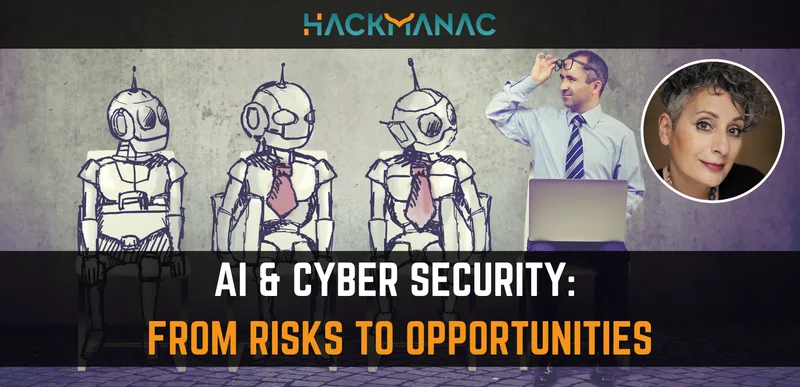
Although Cyber Security is constantly evolving, the most important emerging threats relate to the rapid spread of artificial intelligence and the increasing pace at which cybercriminals are adopting this technology to facilitate their operations.
However, this trend is not unexpected: back in 2019, a Forrester Research report highlighted growing concern about the potential for artificial intelligence to increase the scope, speed, and innovation of attacks to the point where it can circumvent traditional defensive approaches.
Years later, this situation is a de facto reality, and the issue is becoming increasingly significant as artificial intelligence advances and its applications progress.
How cybercriminals can use AI
Generative artificial intelligence and large language models (LLM) in 2024 will be used by cyber criminals to significantly increase the effectiveness and scope of social engineering attacks: this is one of the predictions that emerged from Google's “Cloud Cybersecurity Forecast 2024” report released late last year.
Further research, on the other hand, found that the use of generative artificial intelligence by cybercriminals led to a significant increase in attacks worldwide over the past 12 months, setting a significantly worrying trend.
The application areas that can be exploited by cybercrime are numerous:
- Malware Creation: Although ChatGPT has special protections in place to prevent users from creating malicious code, these can be bypassed to create malware. This was demonstrated by a Forcepoint researcher who was able to find a loophole and create malware by asking ChatGPT to provide malicious code on a function-by-function basis. The result was an executable undetectable by defense systems and with a level of sophistication equal to nation-state malware. Most disturbingly, the researcher succeeded without recruiting professional cyber criminals or having to write the malware himself. Recently, the Finnish cybersecurity solutions company WithSecure confirmed that it has detected samples of ChatGPT-generated malware, reinforcing that cyber criminals are already exploiting legitimate tools for their malicious operations.
- Spreading malware and vulnerabilities: Cyber criminals can leverage generative artificial intelligence to introduce and spread malicious packages into developer environments where AI tools are often used to support software creation. This would enable the rapid distribution of vulnerabilities and malicious code within companies.
- Phishing and Social Engineering Optimization: Generative artificial intelligence can be leveraged to evolve attacks to levels of speed and complexity never before experienced. For example, in the case of phishing, vishing, and social engineering, content, whether textual or audio and video, as in deepfakes, can become increasingly realistic and seemingly legitimate. Gen AI is increasing the sophistication of attacks, in part by eliminating errors that in the past made it easy to detect a phishing email. In addition, this technology is also expanding the reach of cyber criminals, who can now create phishing campaigns with correct text in almost any language, including the most complex.
- Impacting physical security: AI is becoming increasingly widespread among self-driving vehicles, medical systems, and industrial equipment. This leads to a significant increase in physical security risks: these systems can indeed be hacked (no system is inviolable!) eventually putting users' lives at risk.
- Risks for Privacy: AI tools can collect large amounts of data that, if breached, can jeopardize users' privacy. But privacy is not the only concern: misuse of this information could support user profiling activities, helpful for cyber criminals to discover flaws in security systems or weaknesses to leverage during their malicious operations.
How AI can be helpful for Cyber Security
As we have seen, artificial intelligence provides a significant advantage to cyber criminals, but cyber security defenders can also leverage this technology to develop more advanced defenses adapted to new threats.
Specifically, the main benefits of AI in Cyber Security include:
- Predictive Models: to shift from a reactive to a proactive approach, identifying new threats early and mitigating risks;
- Threat Detection: through antivirus/anti-malware software enhanced with AI and machine learning that can detect anomalies, protecting systems and endpoint devices;
- Phishing Detection: through special email filters that, leveraging AI capabilities, analyze incoming mail to flag and block spam and phishing;
- Bot Identification: through machine learning models that can analyze network traffic to identify and block malicious bots;
- Network Protection: AI can analyze system logs to detect unauthorized access and other suspicious patterns, preventing breaches;
- Strengthening Access Control: through control tools that, enhanced with AI, can block suspicious access;
- Mitigation of Internal Threats: through identification of risky behavior by users and preventing leakage of sensitive information;
- Incident Response: AI can operate 24/7 to proactively respond to threats by reducing incident response time;
- Efficiency and IT Cost Savings: by automating security tasks, AI improves the efficiency of operations while reducing costs.
Companies of any size and type are already leveraging AI to strengthen their Cyber Security strategy, such as in identity management systems used by banks and governments, or in anti-fraud systems in the financial and real estate sectors that can detect anomalies early. In these, as in many other scenarios, AI enables not only improved accuracy and speed of response in countering cyber threats, but also cost savings.
Conclusion
While AI poses new challenges by enhancing the capabilities of cybercriminals, it also offers powerful tools for strengthening Cyber Security.
The future of Cyber Security will depend on how effectively AI is used to not only manage current risks, but also to anticipate and mitigate future risks, taking advantage of all the benefits. By adopting AI-driven solutions, organisations can actually strengthen their defences, improve efficiency and stay ahead in the ongoing battle against cyber threats.
Stay Cyber Safe!