TL;DR
- On June 12, 2026, the US government ordered Anthropic to disable its two most advanced AI models, Fable 5 and Mythos 5, for all foreign users worldwide, citing national security.
- The same technical concern applies to OpenAI's GPT-5.5, but no equivalent measure was taken against OpenAI, suggesting that the real reasons are political and commercial rather than technical.
- The episode sets a dangerous precedent: any non-American business can be deprived of its AI capabilities, and potentially of any other foreign technology, at any time and without notice.
- For decades the rest of the world has used American technology without questioning where ownership really sits. That question can no longer be avoided.
The US government has recently ordered Anthropic to block access to its two most recent models, Claude Fable 5 and Mythos 5, for all foreign nationals, both inside and outside the United States, including the company's own foreign employees, citing a risk to national security.
Since the rule could not be applied selectively, Anthropic preferred to disable the models for everyone, even though Mythos 5 was already subject to limitations under Project Glasswing and accessible only to around 150 vetted organizations, precisely to prevent its capabilities from being commercialized.
This is the first time a leading AI company has been forced to disable a publicly deployed model because of a federal order, and also the moment in which technology and geopolitics begin to converge.
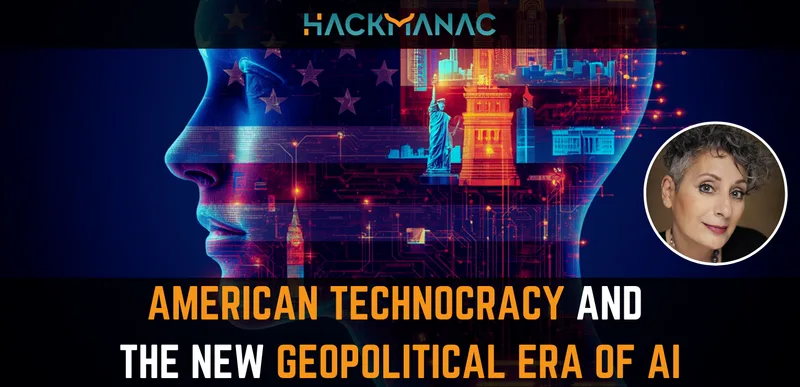
The new geopolitical turn of technology
Most of the technology we use every day is American: operating systems for computers and smartphones, search engines, AI, applications, cloud repository, and so on.
Until now it has simply been more convenient to rely on foreign technologies, with the illusion that paying for a license also meant owning them outright.
Europe has focused its efforts on regulating the use of these technologies, rather than on innovation or investment in domestic alternatives.
The geopolitical shift now taking shape around artificial intelligence, and that could easily extend to any other technology, is making clear how risky this comfortable attitude may have been. The origin of a technology now turns out to be a detail we can no longer afford to ignore.
For years, US export controls in the AI field have focused on chips and manufacturing tools. This is the first time the US government has intervened at the application layer, telling a private company which users, by passport, may use its product.
The political and commercial reasons behind the ban
The concern raised by the US government lies in the ability of Claude's advanced models to identify exploitable software flaws, a capability that, while giving a significant advantage to attackers, also allows defenders to find and patch vulnerabilities in their own systems.
But, although national security has been invoked, the reasons behind the ban of Anthropic's models appear to have rather different origins.
First, other AI models (above all GPT-5.5) are subject to the same issue, yet OpenAI has received no similar request to disable its models.
Furthermore, even if the main concern did imply a national security risk, it is unclear why the US government chose to restrict the models only to users of American nationality and not to everyone.
On the other hand, the recent history between the US government and Anthropic is well known, and their relationship has visibly deteriorated since the company refused to allow the US armed forces to use its models for domestic surveillance and fully autonomous weapons systems.
Anthropic has also filed for a US IPO, ahead of OpenAI, and the removal of its flagship model from the market clearly represents an advantage for its main competitor.
A dangerous precedent
The Fable 5 episode shows explicitly that the US government can, at any time, deprive any non-American business of its AI capabilities (and potentially any other technology), with no prior notice, no transparent technical justification, and regardless of where users are located.
The European Commission reacted immediately, stressing Europe's need for technological sovereignty, while the UK government framed access to AI capabilities as a matter of national security.
Beyond the political reactions, the practical consequences for any non-American organization are significant:
- Continuity risk on AI is no longer an IT-only matter. A core business capability could be disabled, with no prior notice and no right of appeal.
- Vendor diversification stops being a best practice and becomes an essential requirement. Relying on a single provider, or on providers operating in a single jurisdiction, concentrates a risk that is no longer just theoretical.
- The legal residency of compute resources and technologies matters more than it did a week ago. Regional clouds offer some protection, but only as long as the underlying provider is able to keep delivering the service.
- It’s time to seriously reconsider in-house technologies and AI models. Technologies under direct control cannot be revoked remotely: while the costs may be different, the risk of a ban on tools essential to the business has to be part of the equation.
Conclusions
While Anthropic hopes to restore access to the banned models as soon as possible, the precedent can no longer be ignored.
For decades, software and applications have been adopted without paying attention to their jurisdiction, while it is now clear that the off switch is not (and never has been) in the hands of the user.
It is therefore worth asking whether the cost of investing in proprietary technology is really higher than the risk of relying on solutions that can be disabled, at any time, by the government that truly owns them.