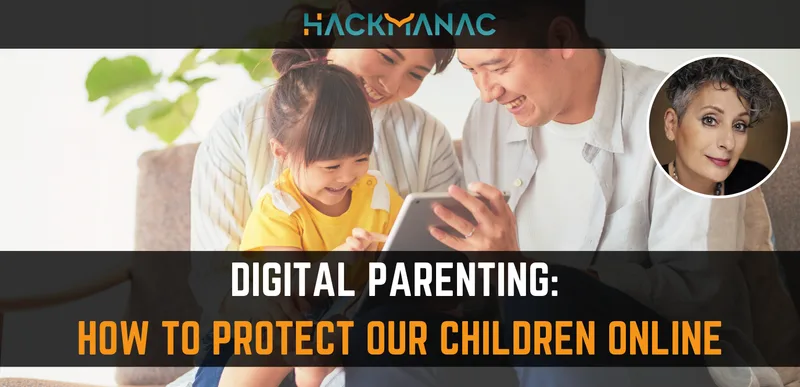
Being a digital parent can be challenging, especially with teenage children who are constantly exposed to online threats.
As a mother and a cybersecurity expert, I am very familiar with the risks that lie online, and I cannot ignore the importance of educating children about the dangers of the digital world.
Here are some useful tips.
Cybersecurity Risks
The digital world has become an integral part of our daily lives, but while for us parents the process was gradual, our children are digital natives and have grown up taking for granted access to the internet, social media, and online games, without considering the dangers hiding behind new technologies.
Cybersecurity should be one of the main concerns of digital parents because cyber threats are numerous: phishing, social engineering, malware, cybercriminals, fraud, and scams are just a few examples.
First, it's important to be aware of these threats and the risks our children face.
Secondly, it is important to talk openly with them so they can recognize these issues.
There are also many technological solutions to protect and monitor children online, such as parental control applications that limit access to certain websites or monitor online activity.
However, it is important not to rely exclusively on technology, which could fail, but rather to educate children about awareness and responsibility.
Cyberbullying and Online Grooming
Many adolescents are victims of cyberbullying, often without their parents' knowledge.
Online grooming is an additional threat in which abusers try to force young people to share personal information or meet in public places.
It is important to have open dialogue with your children and insist that they keep you informed of their activities so that any anomalies can be early detected and addressed.
At the same time it is important to encourage children to report any suspicious or intimidating behaviour.
Privacy
It is crucial to make it clear to our children that they should never share personal information online, such as their address, phone number, or location.
Children should also be taught how to create secure passwords and protect their online accounts.
Social Media
Monitoring social media use is another useful tip. You need to check your children's profiles to ensure they aren't sharing personal information or being exposed to inappropriate content.
Additionally, many social media platforms, such as Facebook and Instagram, have age restrictions, so it's important to ensure that these restrictions are being followed.
Online Games
Online games can be insidious.
Some platforms allow players to communicate with each other in real time, which can provide an opportunity for attackers to recruit young victims.
Parents should monitor children's use of online games, as well as whom they play with.
Responsible Behaviour
Educating children about the importance of responsible online behaviour is a priority.
Children must be aware of the impact of their words and actions online.
In the digital world, just as in real life, we must be respectful of others and avoid spreading hate and bullying.
The Importance of Example
Finally, parents need to consider how their own online behaviour can impact their children.
Some useful tips for setting the right example for our children on proper and balanced digital use include avoiding posting excessive personal or family-related information online, keeping in mind the risks of cyber threats, and remembering the difference between real life and virtual life.
Conclusions
Digital parenting is certainly challenging, as well as an important responsibility.
However, it can also be an opportunity to help our children become more aware of the risks and threats of the digital world and to become more responsible digital citizens.
Stay Cyber Safe!